
Effects and use of CBD patches
Article author: Lucie Garabas
CBD patches have quickly become a popular aid, especially in the fight against pain. Their use is discreet and yet very effective. Let’s take a look at the real effects and use of CBD patches, the latest scientific findings and Cannadorra customer experiences.
Article summary:
- CBD patches release cannabidiol gradually through the skin directly into the bloodstream and are often used mainly for muscle, joint or back pain.
- The advantages of CBD patches include long-lasting effects, convenient use and stable CBD release without burdening the digestive system.
- For sensitive skin, adhesive allergies or long-term health problems, it is advisable to consult their use with a specialist.
In this article, you will learn:
- What are CBD patches?
- How do CBD patches work?
- How do CBD patches work for pain?
- What does science say about transdermal CBD?
- Real customer experiences
- How to use CBD patches correctly?
- CBD patch vs. CBD gel – which is better?
What are CBD patches?
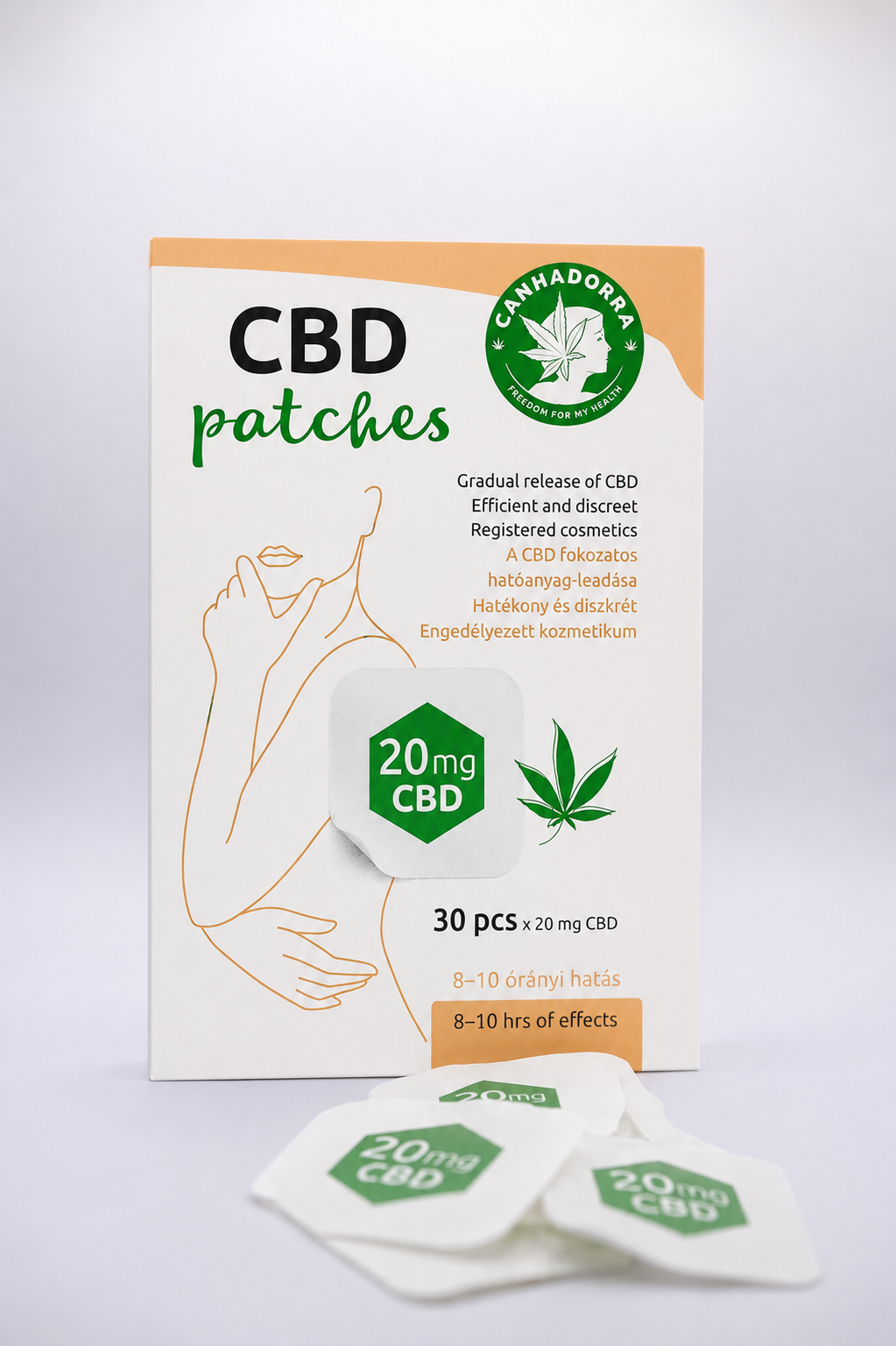
Imagine a transparent patch – also known as a transdermal patch – that contains CBD. That is exactly what Cannadorra CBD patches are. In addition, they have a pleasant scent and confirmed effects.
CBD from the patches is released through the skin into the blood slowly and evenly – for up to a full 24 hours. This way of taking CBD is especially suitable for people troubled by pain. However, it is also popular among other CBD users who prefer discreet and convenient use instead of taking drops or swallowing capsules.
How do CBD patches work?
They work similarly to nicotine patches and deliver CBD directly into the bloodstream – without the need to pass through the digestive system.
This transdermal method delivers CBD directly to the area around the patch and from there into the bloodstream. Why is this important? When people take CBD orally – for example through oil – CBD must first pass through the digestive system. The body can then use it, break it down or simply excrete it. As a result, a large part of an oral dose of CBD may be lost in the digestive tract (this effect is called bioavailability).
A transdermal patch applies CBD directly to the skin, where it is absorbed and allowed to enter the bloodstream directly. As stated in a study in Molecules, this application allows CBD to bypass the digestive system and significantly increases the bioavailability of the product.
How do CBD patches work for pain?
Cannabinoids such as CBD act against pain in two different ways:
- Firstly, they act on the endocannabinoid system in the body and block receptors for various types of pain – including those that are otherwise difficult to treat, such as nerve pain.
- Secondly, they have an anti-inflammatory effect in the body, which helps reduce pain arising from inflammation.
Thanks to these effects combined with transdermal administration, CBD patches are most effective for inflammation, nerve pain and localized pain.
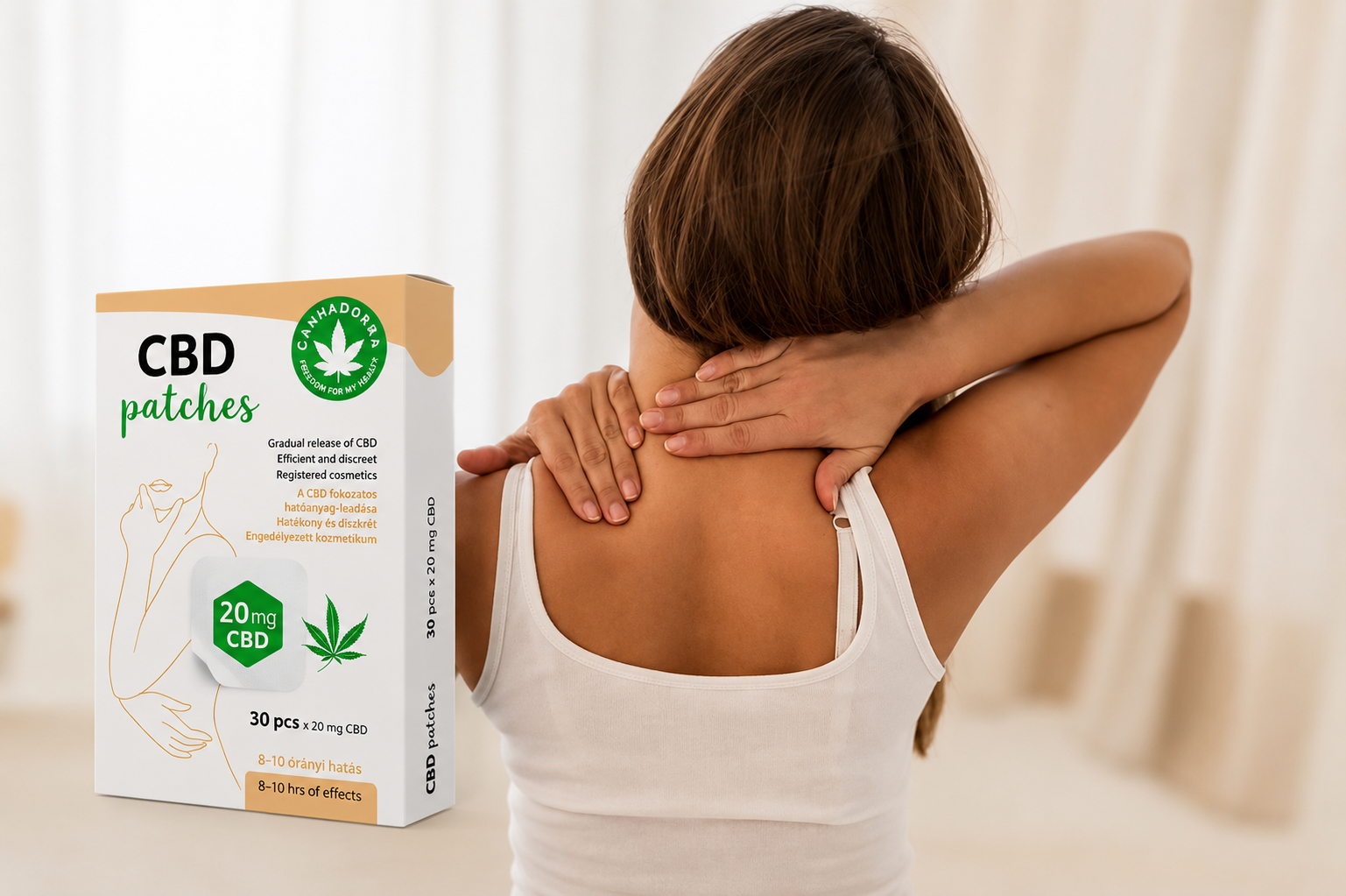
Benefits of using CBD patches for pain
- Continuous and long-lasting CBD delivery – up to 24 hours from a single patch
- Minimal unwanted effects
- Localized anti-inflammatory activity directly at the painful area
- Localized pain relief without burdening the digestive system
- Suitable for combination with CBD oil for maximum overall effect
What does science say about transdermal CBD?
Scientific interest in transdermal CBD has grown significantly in recent years, and the results are promising.
Review study from 2024 (PMC – PubMed Central): A broad review summarizing current clinical and preclinical studies on transdermal CBD for acute inflammatory pain confirmed that CBD shows anti-inflammatory, analgesic, antiemetic, neuroprotective and antioxidant properties. The authors emphasize that transdermal administration is user-friendly, achieves better bioavailability than oral intake and is associated with a slower but more stable onset of action – which is a key advantage in chronic pain.
A 2019 study (MDPI / Journal of Clinical Medicine) confirmed that topical CBD helps control myofascial pain (changes in local muscle tension). The study focused on muscles around the head and jaw in people with temporomandibular disorder (TMD) and concluded that CBD has potential as a treatment option.
A study in the journal Postgraduate Medicine examined the effect of CBD on people with chronic pain who were using opioids to manage that pain. Of the 97 participants, 94% reported an improved quality of life while using CBD. In addition, more than half of them reduced or completely eliminated opioid use after 8 weeks.
Overall, science confirms that transdermal CBD is one of the most promising forms of administration – and Cannadorra CBD patches work on exactly this principle.
Real customer experiences with CBD patches
We asked you, our customers, how CBD patches work for you. Here are your experiences – honest and real:
“After surgery, I spent almost a month in hospital. My herniated disc suffered because of it. I started using the patches after returning home 14 days ago, 1 patch once a day. The patches reduce pain in my lumbar spine and significantly spare my digestive system, which is burdened by many medicines. Thank you so much for them, and I recommend them to everyone.”
– Petra
“I have tried them and can only recommend them. They work beautifully on my currently very sore lower back. They relieve pain. They also worked great on an overloaded Achilles tendon. I would say the effect lasts longer than 10 hours. But that is my personal impression.”
– Daisy
“They worked wonderfully on my cervical spine; I warmly recommend them.”
– Andrew
“Excellent, the patch relieves pain – in my case, around the attachments near the cervical spine. I am after surgery.”
– Irene
“I don’t even know how to praise them enough. I use them both for pain after back surgery and for wrist pain – carpal tunnel/arthrosis – and they work perfectly. The pain really disappears.
I also gave some to my grandmother (90 years old) to try. She has arthrosis practically everywhere, and her knees hurt the most. Today she called me and was incredibly happy: ‘Today at noon I put the patches under both knees and after about an hour the pain in the knee after surgery decreased, and in the other one the pain disappeared completely – I have been walking all afternoon without a walker and I have no pain. THIS HAS NEVER HAPPENED TO ME BEFORE.’”
– Catherine
“In the third week after applying the patches to my mother’s painful knees, I can say that they really work. The pain is subsiding and joint mobility has improved as well. Although none of us can stop degenerative changes, we can improve quality of life. That is why I recommend them!”
– Eve
How to use CBD patches correctly?
The patches are not intended for application to mucous membranes or damaged skin. Read the instructions on the packaging before application, but in general proceed as follows:
- Remove the patch from the packaging and place it on the painful or injured area.
- It adheres best to areas with soft tissue – the lower back, calf, shoulder – rather than joints such as the elbow, where it may peel off during movement.
- Wear the patch for the maximum time recommended on the packaging (24 hours for Cannadorra).
- Remove the patch and apply a new one if needed.
CBD patch – step-by-step application
Cannadorra
Take the patches out of the box
Remove the patch from its protective packaging and make sure the skin is clean and dry.
Peel off the protective film
Carefully remove the transparent protective film from the adhesive side of the patch.
Apply to the painful area
Place the patch directly on the painful area and press firmly. It works best on soft tissue – the back, calf or shoulder.
Leave on for up to 24 hours
After the recommended time has passed, remove the patch. Apply a new one if needed.
Do not apply to damaged skin or mucous membranes. For maximum effect, combine with CBD oil.
Do CBD patches work better for pain than CBD gels?
Patches provide a more consistent and longer-lasting solution than other topical methods such as CBD gels. While gels need to be applied several times a day (their effect decreases after absorption into the skin), patches release CBD evenly throughout the day.
In Cannadorra’s hemp advisory service, however, we recommend combining both products for maximum effect. The ideal approach is to target pain from two sides at once: locally (CBD patch or CBD gel directly on the painful area) + systemically (CBD oil or capsules for an overall anti-inflammatory and analgesic effect). This combination brings the best results – and our customers confirm it too.
Sources and studies used
- Lodzki et al.: Cannabidiol – transdermal administration and bioavailability – Molecules (2003)
- Review study: Transdermal CBD for acute inflammatory pain – PMC / PubMed Central (2024)
- Nitecka-Buchta et al.: CBD and myofascial pain in temporomandibular disorder – Journal of Clinical Medicine (2019)
- Capano et al.: CBD in chronic pain and reduced opioid use – Postgraduate Medicine (2020)