
Thyroid Gland - What is its function and how does its disorder manifest?
The thyroid gland is a very important organ that controls many essential functions in your body. We will explain exactly which ones. We will also introduce the diseases that can affect the thyroid gland and look together at how CBD can help support thyroid care.

In this article, you will learn:
- What is the thyroid gland and how does it work?
- Where is the thyroid gland located?
- What thyroid diseases do we know?
- Symptoms of thyroid disease
- Examination
- How is thyroid disease treated?
- How does CBD affect the thyroid gland?
Article summary:
- The article explains the role of the thyroid gland in the body and how it affects metabolism, energy, hormonal balance, and overall bodily function.
- It describes the most common thyroid disorders, their symptoms, diagnostic options, and treatment methods, highlighting issues such as fatigue, weight changes, sleep problems, and mental well-being.
- The article also includes information about the possible effect of CBD in supporting the body during thyroid-related difficulties, along with recommendations on when it is appropriate to consult a specialist.
What is the thyroid gland and how does it work?
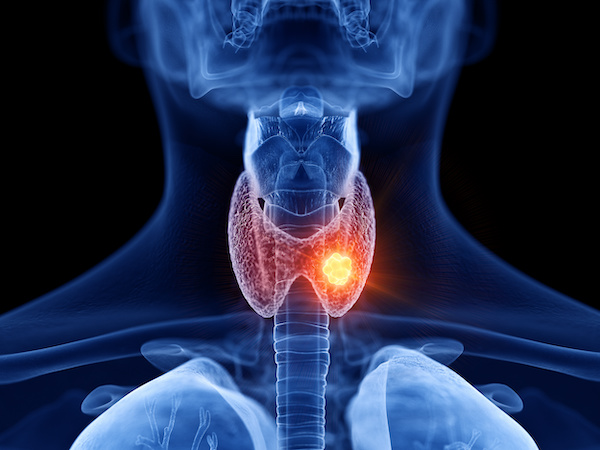
The thyroid gland is a small butterfly-shaped gland located at the front of the neck beneath the skin. It is part of your endocrine system and controls many important functions in your body by producing and releasing certain hormones.
The main role of the thyroid gland is to regulate the speed of your metabolism, which is the process by which your body converts the food you eat into energy. Every cell in your body needs energy to function properly.
If the thyroid gland does not work correctly, it can have a negative impact on your entire body.

What is the endocrine system?
The endocrine system is a network of several glands that produce and release hormones.
A gland is an organ that produces one or more substances, such as hormones, digestive juices, sweat, or tears. Endocrine glands release hormones directly into the bloodstream.
Hormones are chemical substances that coordinate various functions in the body by carrying messages through the blood to organs, skin, muscles, and other tissues. These signals tell the body what to do and when to do it.
Your endocrine system consists of the following organs and glands:
- Hypothalamus
- Pituitary gland
- Thyroid gland
- Parathyroid glands
- Adrenal glands
- Pineal gland
- Pancreas
- Ovaries
- Testes
Where is the thyroid gland located?
The thyroid gland is located at the front of the neck, below the trachea. It has a butterfly-like shape – it is smaller in the middle and has two wider wings that extend along the sides of the neck. A healthy thyroid gland is usually not visible from the outside, and you cannot feel it by placing your finger on the front of your neck.
What are the parts of the thyroid gland?
The thyroid gland has two main parts: two halves, called lobes, and the central part that connects both lobes, known as the thyroid isthmus.
What exactly does the thyroid gland do?
As an endocrine gland, the thyroid produces and releases hormones:
- Thyroxine (T4): The main thyroid hormone with a key role in metabolism regulation. It contains iodine.
- Triiodothyronine (T3): Plays an essential role in regulating metabolism and energy balance in the body. It contains iodine atoms and has greater biological activity than T4.
- Reverse triiodothyronine (rT3): A by-product of the conversion of T4 into T3. Unlike active T3, it has no biological activity and has more of an inhibitory effect on thyroid function.
To produce hormones, the thyroid gland needs iodine, an element found in food, most commonly in iodised table salt, and in water.
Thyroid hormones influence the following bodily functions:
- Metabolism
- Heart rate
- Breathing
- Digestion
- Body temperature
- Brain development
- Mental activity
- Skin and bone quality
- Fertility
The thyroid gland and its hormones affect almost every organ in your body, including:
- The cardiovascular system: The thyroid helps regulate cardiac output, heart rate, and the strength of heart contractions.
- The nervous system: When the thyroid is not functioning properly, symptoms such as numbness, tingling, or pain may occur. Hypothyroidism can cause depression, while hyperthyroidism may lead to anxiety.
- The digestive system: The thyroid is involved in the movement of food through the digestive tract, known as gastrointestinal motility.
- The reproductive system: When thyroid function is impaired, irregular menstruation and fertility problems may occur.
Can a person live without a thyroid gland?
Yes, you can live without a thyroid gland. However, you will need to take hormone replacement medication for the rest of your life. Thyroid removal surgery, known as thyroidectomy, is a common surgical procedure used to treat certain thyroid conditions.
What thyroid diseases do we know?
Thyroid disease affects women about 5 to 8 times more often than men.
The four main thyroid diseases include:
Hypothyroidism, or underactive thyroid
This occurs when the thyroid gland does not produce and release enough hormones. As a result, the metabolism slows down.
Causes of hypothyroidism:
- Hashimoto’s disease, an autoimmune disorder
- Thyroiditis, or inflammation of the thyroid gland
- Iodine deficiency
- A non-functioning thyroid gland from birth
Hyperthyroidism, or overactive thyroid
Hyperthyroidism occurs when the thyroid gland produces and releases more hormones than the body needs. This speeds up certain aspects of metabolism.
Causes of hyperthyroidism:
- Graves’ disease, an autoimmune disorder
- Thyroid nodules
- Thyroiditis, or inflammation of the thyroid gland
- Postpartum thyroiditis
- Excess iodine from food or medication
- A benign pituitary tumour
Enlarged thyroid gland, or goitre
This is a relatively common condition with various causes. The thyroid gland may enlarge as a compensatory response when hormone production is insufficient or when there is not enough iodine in the diet. In most cases, sporadic goitres have no known cause.
Thyroid cancer
Thyroid cancer begins in the tissues of the thyroid gland. Treatment is highly successful in most cases.
What are the first warning signs of thyroid problems?
The thyroid gland plays a major role in regulating heart rate, metabolism, and body temperature. Pay particular attention to the following symptoms:
- Slow or fast heart rate
- Unexplained weight loss or weight gain
- Difficulty tolerating cold or heat
- Depression or anxiety
- Irregular menstruation
If you experience any of these symptoms, talk to your doctor about whether they could perform a blood test to check your thyroid function.
Thyroid examination
The basic examination is a blood test that measures the level of thyroid-stimulating hormone (TSH) – a screening test for both hypothyroidism and hyperthyroidism. Some private laboratories can provide results within a few hours.
The normal range for a TSH blood test is approximately 0.5 to 5.0 mIU/L, although this value may vary depending on the laboratory and factors such as pregnancy or age.
Your doctor may also check the levels of T3 and T4 in your blood. If the results are abnormal, they may suggest imaging tests, such as an ultrasound or thyroid scan.

How is thyroid disease treated?
There are several treatment options depending on the type and severity of the condition:
Thyroid medication
Antithyroid medication blocks the thyroid gland’s ability to produce hormones in cases of hyperthyroidism. Beta blockers help treat symptoms of hyperthyroidism, such as a fast heartbeat. Radioactive iodine damages thyroid cells and is used for hyperthyroidism and thyroid cancer. Thyroid hormone medication is a synthetic hormone replacement used for hypothyroidism – people who have had a thyroidectomy usually take it for the rest of their lives.
Surgery
The most common type is thyroidectomy – the surgical removal of the entire thyroid gland and the first-choice treatment for thyroid cancer. An alternative is lobectomy, which involves removing only part of the thyroid gland.
Radiotherapy and chemotherapy
Both therapies are treatment options for thyroid cancer – they destroy cancer cells and prevent them from growing. Most cases of thyroid cancer do not require them.
What are the risk factors for developing thyroid disease?
- A family history of thyroid disease
- Autoimmune diseases, such as type 1 diabetes, rheumatoid arthritis, or lupus
- Use of medicines with a high iodine content
Proper thyroid care
The main way to keep your thyroid healthy is to ensure adequate iodine intake in your diet. Most people get iodine through iodised table salt and iodine-fortified foods.
Other sources of iodine include:
- Cheese and cow’s milk
- Eggs and yoghurt
- Sea fish, crustaceans, and shellfish
- Seaweed
- Soya milk and soy sauce
It is important not to consume too much iodine, because excess intake can cause problems. If you have any questions or concerns, consult your doctor.
How does CBD affect the thyroid gland?
CBD interacts with the endocannabinoid system (ECS) – an extensive network of specialised receptors located throughout the body that helps the body maintain homeostasis, meaning balance. A 2015 study found the presence of CB1 and CB2 cannabinoid receptors directly in the thyroid gland, suggesting that the ECS may influence the function of this organ.
It is important to be honest: so far, no study has clearly proven that CBD directly regulates thyroid hormone production. What scientific research shows with greater certainty, however, is the ability of CBD to help with symptoms that very often accompany thyroid disorders.
What can CBD demonstrably help with in thyroid disease?
Anxiety and mental discomfort: Anxiety is one of the most common symptoms of hyperthyroidism, while depression often accompanies hypothyroidism. A 2024 systematic review of randomised controlled trials confirmed that CBD shows therapeutic potential in various types of anxiety disorders. Improvements in mood and sleep quality were also observed.
Insomnia: Sleep disorders affect many patients with thyroid problems. A 2025 review study including 29 studies found that cannabinoids – especially CBD – show potential effectiveness in improving sleep quality and easing insomnia.
Inflammation: CBD has well-documented anti-inflammatory and antioxidant properties. This may be especially relevant in autoimmune thyroid diseases such as Hashimoto’s disease or Graves’ disease, where inflammation plays a key role.
Pain, fatigue, and skin problems: CBD may also help with other accompanying symptoms of thyroid disease, including pain, muscle fatigue, and skin issues.
Important warning: CBD and thyroid medication
If you take thyroid medication, especially levothyroxine, consult your doctor before using CBD. The updated 2026 position of the European Food Safety Authority (EFSA) points to a proven interaction between CBD and levothyroxine, which may affect thyroid hormone metabolism and the effectiveness of treatment.
Overall, CBD may be a valuable addition to thyroid care – not as a replacement for treatment, but as support in managing accompanying symptoms. Always use it in accordance with your doctor’s recommendations.
Article author: Lucie Garabas