
Medicinal mushrooms of traditional Chinese medicine: a guide to the most important ones
If someone had told you twenty years ago that mushrooms would one day sit on the same shelf as vitamin C or omega-3, you probably would not have believed them. Today, medicinal mushrooms are one of the fastest-growing categories of natural dietary supplements in the world — and science is beginning to confirm what traditional medicine has known for centuries. But what exactly are we talking about? And why are they worth paying attention to?
Article guide:
- What are medicinal mushrooms and why have they been used for thousands of years?
- Four mushrooms worth knowing
- How to use mushrooms correctly
- What to watch out for
- Which other mushrooms from traditional Chinese medicine are worth mentioning?
📋 Brief summary
- Medicinal mushrooms are natural tools of traditional Chinese medicine with thousands of years of use behind them, and modern science is gradually confirming their value — thanks to their content of beta-glucans, triterpenes and adaptogenic compounds.
- Reishi, Chaga, Cordyceps and Lion’s Mane each have a different primary effect: reishi supports sleep and calm, chaga is a powerful antioxidant, cordyceps boosts performance and energy, while lion’s mane is unique in its natural ability to stimulate nerve cell growth.
- The form and quality of the extract are crucial — the active substances are enclosed in a chitin cell wall, which is why extracts work significantly better than raw biomass powder.
- Consistency and patience are essential — the first results usually appear after 4–8 weeks, and cyclical use with breaks is recommended.
What are medicinal mushrooms and why did traditional Chinese medicine use them for thousands of years?
Medicinal mushrooms are specific species of fungi — mostly wood-growing or parasitic varieties — that have been used in traditional Chinese medicine (TCM) for more than 2,000 years. Ancient Chinese physicians referred to them as “superior tonic herbs” — remedies that strengthen the body without burdening it.
What do these mushrooms have in common? They contain a group of substances called beta-glucans — polysaccharides that significantly influence the immune system. They also contain triterpenes, ergosterol (a precursor of vitamin D) and a wide range of adaptogenic compounds that help the body cope better with both physical and mental stress.
Unlike synthetic medicines, they do not act like a switch — simply turning something on or off. They work more like a tuner: helping the body find balance where it has been lost.
Four mushrooms worth knowing
1. Reishi (Ganoderma lucidum) — the mushroom of immortality
Reishi holds a special place in traditional Chinese medicine. It is known as “Lingzhi” — the spirit mushroom or mushroom of immortality — and for centuries it was reserved only for emperors and the highest nobility. In the wild it is rare; today it is cultivated under controlled conditions.
What scientific studies tell us:
Reishi is among the most thoroughly studied medicinal mushrooms. Research shows that polysaccharides and beta-glucans from reishi support the activity of NK cells and macrophages — important components of innate immunity. Experimental studies also suggest a positive effect of reishi on sleep quality and the body’s stress response, probably through modulation of the HPA axis (the hypothalamic-pituitary-adrenal axis).
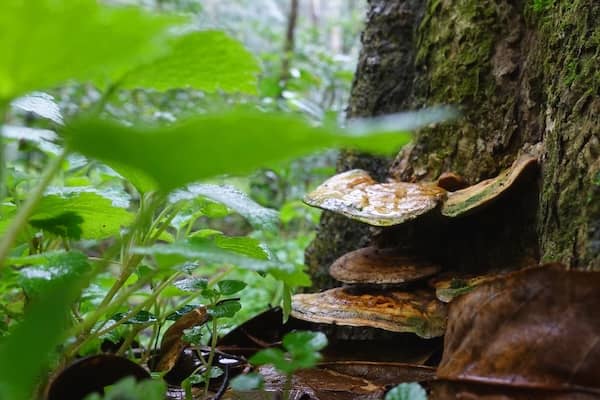
Image source: Pixabay
What to watch out for:
Reishi is a strong immune modulator — and it can work in both directions. In autoimmune conditions such as rheumatoid arthritis or lupus, it may theoretically intensify immune responses, so people with autoimmune diseases should use it only after consulting a doctor. Another less-discussed point: reishi can mildly thin the blood and may enhance the effect of anticoagulants such as warfarin.
2. Chaga (Inonotus obliquus) — the king of Siberian forests
Chaga does not look like a typical mushroom. It grows as a black, charcoal-like growth on birch trees in cold regions of Siberia, Scandinavia, Canada and Northern Europe. Local populations used it for centuries as a tea — to strengthen the body, support wound healing and help with stomach discomfort.
What scientific studies tell us:
Chaga contains an exceptionally high amount of antioxidants — according to some measurements, it ranks on the ORAC scale (oxygen radical absorbance capacity) as one of the most potent natural substances, far surpassing blueberries or pomegranate. A key component is betulinic acid, which chaga draws from birch bark — and this compound is currently the subject of intense research in oncology. In vitro studies indicate its ability to initiate apoptosis (programmed cell death) in tumor cells without damaging healthy cells.
A study showed that administering chaga extract to diabetic rats led to a statistically significant reduction in blood glucose levels. In some groups, the decrease was around 30%. 😊
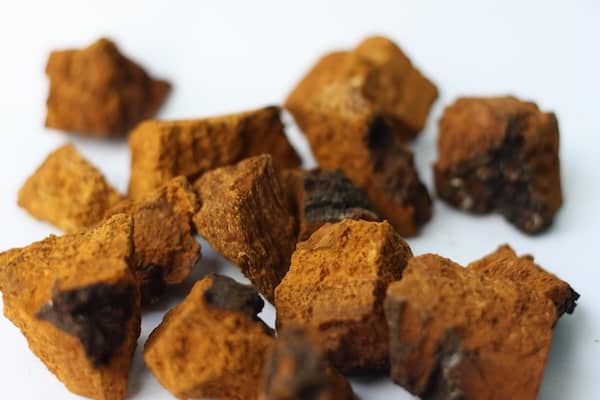
Image source: Pixabay
What to watch out for
Chaga contains very high levels of oxalates — substances that, when consumed excessively, may contribute to the formation of kidney stones. People with kidney disease or a tendency toward urolithiasis should be cautious and avoid taking high doses of chaga over the long term. Chaga may also interact with insulin and diabetes medication — the combination can lead to blood sugar levels that are too low.
3. Cordyceps (Cordyceps sinensis / militaris) — the mushroom of Tibetan athletes
The story of cordyceps is fascinating and slightly unsettling. In nature, it parasitizes insect larvae — most commonly the caterpillars of ghost moths in the Tibetan mountains — growing out of them as a thin sprout. Tibetan herders noticed that yaks grazing on these fungi were unusually vigorous and energetic. This observation gave rise to the centuries-old tradition of using cordyceps to support physical performance and libido.
What scientific studies tell us:
Cordyceps contains a unique compound called cordycepin (3'-deoxyadenosine), which has few parallels in nature. A study on athletes published in the Journal of Alternative and Complementary Medicine showed that 12 weeks of cordyceps supplementation increased VO2 max (maximum oxygen uptake) by 7% compared with placebo — a result comparable to some legal sports supplements.
The mechanism differs from that of common stimulants: cordyceps increases ATP (adenosine triphosphate) production in cells and supports oxygen utilization at the cellular level. Its effect is gradual and sustained — not a quick spike like the one produced by caffeine.
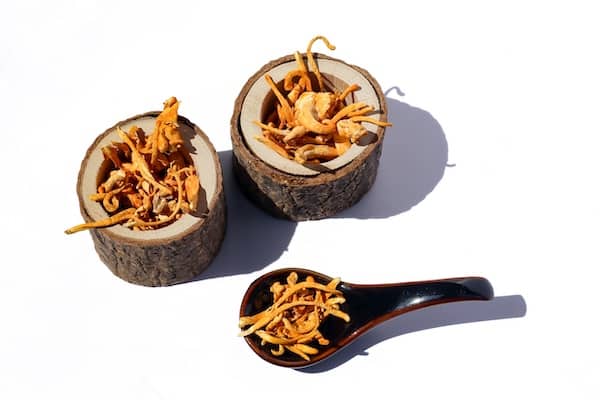
Image source HERE.
Why Cordyceps militaris rather than sinensis:
Wild Cordyceps sinensis from the Tibetan highlands is one of the most expensive natural products in the world — a kilogram can sell for tens of thousands of dollars, availability is limited, and quality varies greatly. Cordyceps militaris is its cultivated relative, and here comes the interesting twist: research shows that militaris contains a higher concentration of cordycepin than wild sinensis. The reason is simple — under controlled growing conditions, the content of active compounds can be deliberately optimized.
The result is a product that is accessible, consistent and well supported by science. This is why Cannadorra uses Cordyceps militaris in its capsules.
What to watch out for:
Cordyceps may stimulate the immune system — just like reishi, it may be unsuitable for people with autoimmune diseases or after transplants, where immunity is intentionally suppressed. If you take any medication, consult your doctor before starting supplementation.
4. Lion’s Mane (Hericium erinaceus) — the mushroom for the brain
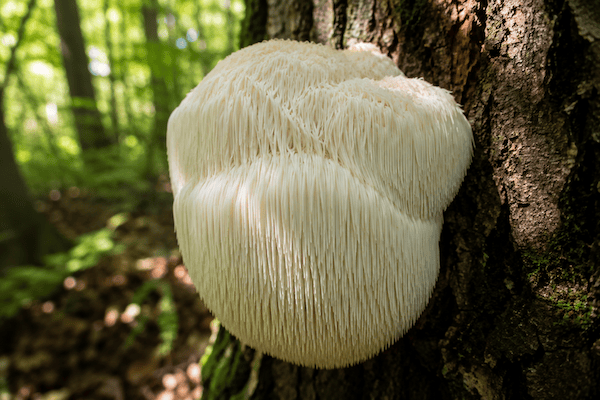
Lion’s Mane looks like a white waterfall or — as the name suggests — a lion’s mane. It grows on the trunks of deciduous trees and is the only one of these four mushrooms that is also commonly eaten as food; in Asian cuisine, it is used as a meat substitute thanks to its fibrous texture and delicate seafood-like flavor.
What scientific studies tell us:
From a neurological perspective, Lion’s Mane is probably the most fascinating medicinal mushroom of all. It contains two unique groups of compounds — hericenones from the fruiting body and erinacines from the mycelium — which are among the few natural substances shown to stimulate the production of NGF (nerve growth factor) and BDNF (brain-derived neurotrophic factor). These proteins are essential for the formation of new neural connections, neuron survival and overall neuroplasticity.
A 2009 clinical study published in Phytotherapy Research followed 30 people with mild cognitive impairment: the group taking Lion’s Mane extract for 16 weeks showed a statistically significant improvement in cognitive function compared with placebo. After supplementation ended, the results returned to baseline — suggesting that the effect depends on regular use.
Research also points to potential benefits in easing symptoms of anxiety and depression — probably through regeneration of the hippocampus, the part of the brain responsible for emotions and memory.
How to take medicinal mushrooms correctly
Form
The highest bioavailability is found in extracts in capsules or tinctures — not in raw biomass powder. The cell wall of mushrooms is made of chitin, which the human digestive system cannot break down efficiently. Extraction releases the active substances from the chitin matrix.
Dosage
Dosage depends on the specific product and the concentration of the extract. In general, it ranges from 500–2,000 mg of extract per day. Start with a lower dose and increase gradually. Take a look at everything you should know about mushroom dosage.
Timing
- Cordyceps — ideally in the morning or before physical activity (energizing effect)
- Reishi — in the evening or before bed (calming effect)
- Lion’s Mane — in the morning or before noon (cognitive support)
- Chaga — at any time, most often as tea or capsules taken with food
Duration of use: Medicinal mushrooms are not a quick fix. Their effects appear gradually — the first results usually emerge after 4–8 weeks of consistent use. Cyclical supplementation is recommended: 8–12 weeks of use, followed by a 2–4 week break.
What to watch out for
Interactions with medication: Reishi and chaga may enhance the effects of anticoagulants such as warfarin or aspirin. Chaga and cordyceps may affect blood sugar levels when combined with antidiabetic medication. If you are taking medication, always consult your doctor before starting supplementation.
Autoimmune diseases: Mushrooms can stimulate the immune system — in autoimmune conditions such as lupus, multiple sclerosis or Crohn’s disease, or after organ transplantation, they are not suitable without medical supervision.
Allergies: Hypersensitivity to mushrooms is rare, but it does exist. When taking them for the first time, begin with a small dose and monitor your reaction.
Pregnancy and breastfeeding: The safety of medicinal mushrooms for pregnant and breastfeeding women has not been sufficiently studied. During this period, it is better to avoid supplementation.
Product quality: The market is flooded with cheap products containing low levels of active compounds. Look for manufacturers that guarantee the content of beta-glucans, cordycepin or other efficacy markers, and that clearly state the extraction method.
Ancient wisdom, modern science
Medicinal mushrooms are not a passing trend. They are natural tools with thousands of years of traditional use, which modern science is slowly but thoroughly investigating — and the results are surprisingly convincing.
Do not expect overnight miracles. But if you are looking for natural support for immunity, the brain, physical performance or overall resilience — and you are willing to give your body time — medicinal mushrooms may be one of the most valuable investments in health you can make.
You can find Reishi, Chaga, Cordyceps and Lion’s Mane in the Cannadorra range →
Which other medicinal mushrooms are worth mentioning?
The world of medicinal mushrooms is much broader than the four mentioned above. Here is an overview of several others that science is paying attention to:
Turkey Tail (Trametes versicolor) — one of the most extensively studied mushrooms in the field of immunity. It contains PSK (polysaccharide-K), which is approved in Japan as an adjunct to cancer treatment.
Shiitake (Lentinula edodes) — a widely available edible mushroom with proven immunomodulatory effects. It contains lentinan, which supports the activity of white blood cells.
Maitake (Grifola frondosa) — the “dancing mushroom” from Japan. Research suggests a positive effect on blood sugar and blood pressure regulation.
Tremella (Tremella fuciformis) — a white jelly-like mushroom known as the “beauty mushroom.” It contains polysaccharides with an exceptional ability to bind water — valued in cosmetics and skin care.
Agarikon (Laricifomes officinalis) — a rare mushroom found in European and North American forests. Historically used for respiratory complaints, it is now in the early stages of research for its antiviral properties.
This article is for educational purposes only. Medicinal mushrooms are dietary supplements — they are not intended to diagnose, treat or prevent any disease. If you have any health concerns or take medication, consult your doctor.