
Growing Hemp – Tips and Advice
Article author: Pavel Cermak
Growing hemp is not only about harvesting flowers – it is a joy, a responsibility, and a way to make high-quality homemade ointments or dried flowers. Whether you grow hemp for your own use, well-being, or curiosity, this article will show you how to do it – from choosing seeds to harvesting.
Article summary:
- Growing hemp starts with choosing suitable seeds, the right location, and respecting the current legal conditions.
- The plant needs enough sunlight, quality soil, regular watering, and suitable conditions for healthy growth.
- Outdoor cultivation requires less equipment, while indoor cultivation allows better control over the environment and plant development.
- A successful harvest depends on proper timing and care throughout the entire growing cycle, from germination to flower maturity.
Why grow hemp?
You can grow hemp for:
- homemade ointment production
- vaporization, for example CBD flowers
- collecting purposes
If you do not feel confident about growing your own plants, you can use our ready-made CBD products or come and visit the Cannadorra Harvest event for inspiration.
Is growing hemp legal?
In Europe, the legality of growing hemp depends on the THC content of the plants, the seed variety, the intended use, and the legislation of the specific country. EU agricultural rules generally allow industrial hemp cultivation only from certified seed varieties listed in the EU common catalogue, provided the THC content is below 0.3%.
🌿 Growing hemp with THC content up to 0.3%
- Generally permitted under EU agricultural rules: Industrial hemp varieties must meet the EU THC limit and usually have to come from certified seed varieties listed in the EU common catalogue.
- National obligations may apply: Some countries may require notification, registration, documentation of seed origin, or official checks, especially for larger areas or commercial cultivation.
🌱 Growing cannabis with THC content above the permitted limit
- Strictly regulated: Cultivation of plants above the permitted THC threshold is regulated much more strictly and may be illegal without authorization.
- Personal cultivation differs by country: Some European countries allow limited personal growing under specific conditions, while others prohibit it entirely.
- Penalties vary: Growing outside the permitted rules may be treated as an administrative offence or a criminal offence, depending on the country and the specific circumstances.
Important notice
- Sharing and selling: Even where limited personal growing is allowed, sharing or selling cannabis to other people may remain prohibited.
- Possession of dried plant material: Possession limits differ significantly across Europe. Exceeding the permitted amount may lead to administrative or criminal penalties, depending on local law.
- Grower’s age: Some countries apply age restrictions for any permitted personal cultivation.
- Household rules: Where plant limits exist, they may apply per person or per household, depending on the legislation of the given country.
🧾 Recommendation
Before starting to grow hemp or cannabis, it is advisable to check the current legislation in your country and, if necessary, consult your plans with a legal professional. It is also important to make sure that cultivation is genuinely intended only for a permitted purpose and is not connected with distribution or sale.
For more information about EU agricultural rules for hemp, you can visit the official European Commission website. For national rules, always check the competent authority in your country.
❓ Do you have questions about growing hemp?
Our specialists will be happy to advise you. Send us your question and receive an answer within 24 hours.
When and where to grow hemp?
Optimal timeline
- February-March: indoor pre-growing
- April-May: outdoor planting
- June-August: growth
- September-October: flowering
- October-November: harvest
However, it always depends on whether you will grow hemp outdoors or indoors. If you decide on outdoor cultivation, the best time to plant is in spring – for example at the end of April. During this period, the soil temperature starts to rise.
Indoor cultivation can begin as early as the end of February or the beginning of March.
Choosing a growing location
Hemp requires:
- a sunny and sheltered location
- soil with a pH of 7–7.3
- regular watering
Seeds are generally sown 2–3 cm deep and about 2 cm apart. It is important that the seed has enough moisture and that the temperature is no higher than 25 °C.
Tip: Growing hemp next to tomatoes can help with moisture management and mold prevention.
Growing hemp step by step:
How to grow hemp step by step
1. Choosing seeds
We recommend feminized seeds, which have up to a 99% probability of producing a female plant suitable for flowers. For example, CBD Candy Dawg Kush with a CBD/THC ratio of 1:1.
And why is the female plant so important to us? Because most growers do not want male plants – they pollinate the females, which then produce seeds, and those are often undesirable for further processing. Male plants are essentially plants full of hemp pollen, which is why we want females.
Of course, if we want seeds, male plants are necessary :-).
CBD Candy Dawg Kush is a photoperiodic indica with a flowering time of 8–9 weeks. The variety has a distinctive sweet taste, as well as a great OG Kush aroma. It is medium-sized and bushy. It is a suitable variety for making concentrates and extracts, where such processing is permitted by local legislation. If it gets one or two extra weeks of flowering, it rewards the grower with high production.
It was created by crossing Candy Dawg Kush X OG Kush CBD varieties. The seeds are feminized.
Important: A variety with a CBD/THC ratio of 1:1 may exceed the legal THC threshold for industrial hemp in many European countries. Only grow varieties that comply with the THC limit and cultivation rules in your country, and only if you are legally allowed to do so.
2. Choosing a growing location for hemp
Outdoor
You can grow outdoors, in a garden, on a balcony, in a forest, in a field... The advantage is that it is relatively undemanding, as nature acts as the gardener, and the plant can grow larger because it has enough space. The disadvantage is the risk of attacks by natural pests, drought, storms and, not least, legal issues if the plants do not comply with local rules.
Indoor
With this option, the advantage is control over growth, as the plants are kept in a cupboard, grow box... This means that the environment is easier to manage. However, it requires a great deal of care to maintain ideal conditions, as well as investment in the technology needed for indoor cultivation. In some countries, indoor growing may also be subject to stricter rules.
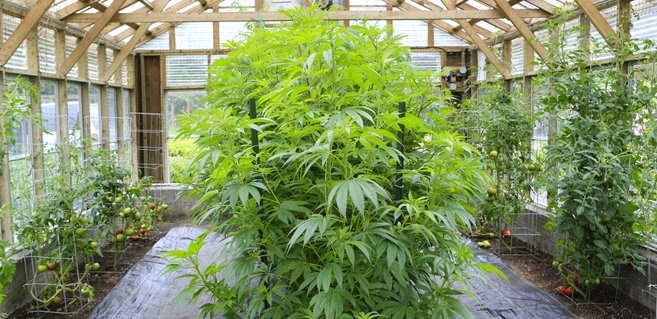
The best compromise seems to be growing hemp in a greenhouse or polytunnel, provided this is permitted in your country.
3. Germinating hemp seeds
There are two options. Either place the seed directly into the substrate 1 cm deep, water it and leave it by the window. The ideal temperature for germination is 25 degrees. Water regularly and ventilate the space. Sprouts will appear within a few days. If you planted several seeds and they germinated, separate the plants before their roots become intertwined. Handle them gently so as not to damage the sprouts.
You can also pre-germinate the seed in water, in cotton wool with water, and only then place it into the substrate. However, this involves more handling and therefore a greater risk of damaging the seedlings.
Germination is never 100%, so it is good to plant more seeds.
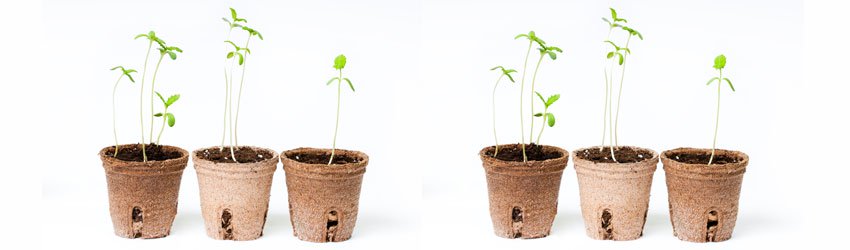
Plant the germinated seed, about 1 cm long, into slightly alkaline soil. In the first stages of growth, choose a sunny location and ensure regular watering.
Pavel Cermak recommends the following for germination:
My favorite way to germinate a hemp seed is to boil hot water and let it cool to room temperature. Then I place the hemp seed intended for planting into it for 24 hours. After 24 hours, I make a hole in the soil where I want to place the seed, about as deep as the first joint of my little finger. I insert the seed, cover it with soil and water it. I water the surface of the soil with a spray bottle; once the soil is moist, that is enough and there is no need to water more. It is very important not to overwater hemp. I repeat this process until the plant comes up.
Pavel recommends these seeds for planting:
4. Planting hemp in a greenhouse or outdoors
After the seed has germinated and the plant reaches a height of 15–20 cm, it is ready to be planted in the ground or, if you initially chose a small pot, into a larger flower pot.
Hemp needs a lot of light in all phases of growth. It is therefore necessary to choose a sunny and sheltered place. Soil quality and fertility are also very important factors. Ideally, the soil pH should be slightly alkaline (pH 7 to 7.3).
It is recommended to plant hemp together with tomatoes. This gives hemp the necessary irrigation. Hemp absorbs moisture, which helps prevent mold on tomatoes.
5. Hemp growth
The growth phase lasts approximately until the end of August, after which the plant begins to flower, roughly until the end of October. It is advisable to trim the plants and thereby influence their height.
As fertilizer, you can use tomato fertilizer, chicken manure or specialized hemp fertilizer.
Keep in mind that the plant needs space for further root growth. Maintain regular watering.
Note: Please note that the plant can grow up to 6 m tall.
🎯 Recommended: Seeds for planting
The variety is suitable for both outdoor and indoor cultivation.
View products6. Collecting/harvesting hemp
Only the female flowers of the plant are collected. These flowers can be used for tea, tinctures, ointments and similar preparations, where this is permitted by local rules. First, dry the flowers at 20° C for 14 days or at 15° C for 3–4 weeks. A dryer can of course shorten the drying time.
Questions and answers about growing hemp:
Question: I cannot manage germination very well; it works only about half the time.
Answer: Hello, regarding germination, there are two options. Either place the seed directly into the substrate 1 cm deep, water it and leave it by the window. The ideal temperature for germination is 25 degrees. Water regularly and ventilate the space. Sprouts will appear within a few days. If you planted several seeds and they germinated, separate the plants before their roots become intertwined. Handle them gently so as not to damage the sprouts.
You can also pre-germinate the seed in water, in cotton wool with water, and only then place it into the substrate. However, this involves more handling and therefore a greater risk of damaging the seedlings. Germination is never 100%, so it is good to plant more seeds.
Discussion: Hello, from many years of experience, I germinate seeds in this way. I soak two cotton pads completely and place the seed between them. I put these wet pads with the seed on the lid of a preserving jar and leave it on the windowsill. It is important that the pad stays wet for the entire time the seed is opening. It must not dry out. In a few days, the seed opens, and I plant it in a small flower pot about 5 cm below the surface. Be careful when watering so that the seed is not washed out.
Question: I would like to try growing hemp only for personal wellness purposes. I am interested in whether CBD varieties are really completely THC-free, or how it actually works. And what can CBD varieties generally be useful for? I sometimes have seasonal skin discomfort and once had an ointment from a friend that suited me, so I would like to make one myself.
Answer: Hello, according to available studies, CBD is being researched in relation to the following areas:
- anxiety-related difficulties and post-traumatic mental strain
- schizophrenia
- epilepsy
- cancer
- diabetes
- obesity
- neurological diseases
- dystonia and dyskinesia
- addictions
- nausea and vomiting
- Alzheimer’s disease
- ischemia
- inflammation
- jaundice
- brain and liver damage
- sepsis
- skin diseases
- allergies and asthma
- night-time rest disorders
CBD varieties are usually not completely THC-free. Hemp seeds and plants may contain at least trace amounts of THC. It is therefore important to choose suitable certified varieties and follow the legal rules in your country. In the EU, industrial hemp cultivation is generally linked to certified varieties below 0.3% THC, but national requirements may differ. CBD products should not be presented as a replacement for medical treatment. If you have a diagnosed condition, take medication, or want to use hemp preparations for a specific health concern, consult a doctor or qualified specialist first.
Sources:
https://en.wikipedia.org/wiki/Cannabis_cultivation
https://agriculture.ec.europa.eu/farming/crop-productions-and-plant-based-products/hemp_en
https://en.wikipedia.org/wiki/Hemp