
Anandamide: The Happiness Molecule You Have Inside You
Author: Lucie Garabasova
You may have heard the term anandamide – sometimes also called the “happiness molecule”. It is a substance that our body produces itself and which is absolutely crucial for a good mood, resistance to stress and overall internal balance. It belongs to the so-called endocannabinoids – i.e. “internal cannabinoids”, which naturally activate the same system in the body that cannabis substances use. While the body produces anandamide itself as needed, we can indirectly support its functioning with lifestyle, quality diet and cannabis products that harmonize the endocannabinoid system (ECS).
And this article will be about why this molecule is so important, how it works in the body and how cannabis is related to it.
Quick article navigation:
- What exactly is anandamide?
- How does anandamide work?
- Why is it called the "happiness molecule"?“
- What does anandamide have to do with hemp?
- How to increase your anandamide levels naturally?
- Cannadorra´s Products that Harmonize Your ECS
- FAQ – Frequently Asked Questions?
What exactly is anandamide? And why should you care?
Anandamide is a substance that your body produces exactly when it needs it – after exercise, while relaxing, when you laugh or when you finally fall asleep after a hard day. Its name comes from the Sanskrit word ananda – which means bliss. And that’s no coincidence. When scientists first discovered this molecule in 1992, they realized they had found something crucial: a natural key to a feeling of well-being.
How does anandamide work? The story of the endocannabinoid system
To understand how important anandamide is, we need to take a moment to delve into the world of the endocannabinoid system (ECS). If you’re hearing about it for the first time, you might be surprised to learn that it was only discovered in the 1990s – and yet it is now considered one of the most important regulatory systems in the body. We also cover it in more detail in our article What is the endocannabinoid system – the human cannabinoid system.
ECS: conductor of inner harmony
You can imagine the ECS as the conductor of a symphony orchestra. If everything is playing in harmony, you don’t even know it exists. But when one part of the orchestra is “out of tune,” the whole body feels it. This system works thanks to two main types of receptors:
CB1 receptors – mainly in the brain
They affect mood, memory, motivation, pain perception, appetite.
CB2 receptors – mainly in the immune system and organs
They affect immunity, inflammatory processes, tissue regeneration.
And anandamide is one of the key “messengers” that act on these receptors. It is produced mainly in the brain and spinal cord, but we can also find it in other parts of the body. What is fascinating about it? It binds to the same receptors as THC, and thus affects our mood, reaction to stress, and subjective perception of pain.
What does anandamide affect?
When anandamide binds to ECS receptors, it triggers a cascade of beneficial effects:
✨ Regulates mood – a feeling of inner peace and contentment
🧘 Reduces stress – reduces the body’s stress response
😴 Improves sleep – helps you fall asleep and rest more deeply
💪 Relieves pain – a natural analgesic
🧠 Improves concentration – brain fog subsides
🍽️ Affects appetite – regulates appetite
🛡️ Strengthens immunity – modulates inflammatory processes
❤️ Supports regeneration – the body heals better

In short: When you have enough anandamide, the world looks a little better.
Why is it called the "happiness molecule"?
Because that's exactly what it does - it makes you feel like everything is fine.
Anandamide is significantly involved in:
- Feeling of reward - when you succeed in something, it's the one who caresses your soul
- Motivation - the desire to do something and move forward
- Joy - that spontaneous, reasonless
- Well-being - a feeling of inner peace
Runner's high? It's not an endorphin - it's anandamide!
It was long believed that the famous "runner's high" - the euphoria after a run - was caused by endorphins. But scientists now know that it's mainly anandamide that's responsible. After intense exercise, its levels rise sharply and you feel like you could lift a car.
And you know what's even better? You don't have to run a marathon. Even a brisk walk, dancing, yoga or sex increase anandamide levels. Your body rewards you for being active.
What does anandamide have to do with hemp?
When scientists began to investigate why cannabis works in the 1980s, they discovered the CB1 and CB2 receptors. And then they asked themselves a logical question: "Why would a person have receptors for the plant in their body?"
The answer was brilliant: No. Those receptors are not there for the plant - they are there for anandamide.
The body has created a system that works on anandamide. And cannabis? It just happens to contain substances that fit this system perfectly.
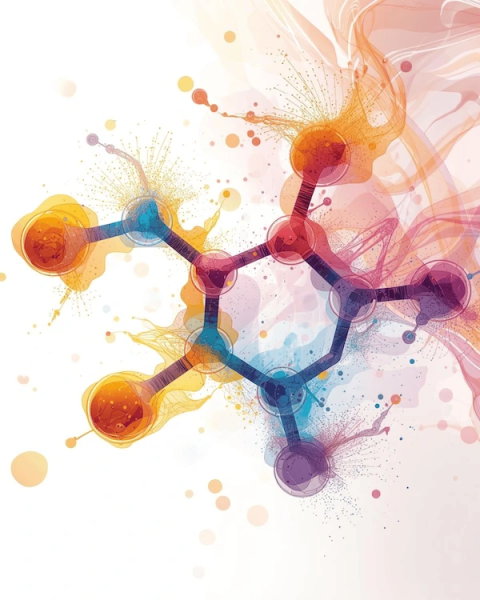
THC = fake anandamide
THC (the psychoactive compound in cannabis) binds to CB1 receptors in the same way as anandamide. That's why it "gets you high" - the brain thinks it's got a mega dose of its own anandamide. The only difference is that THC lasts in the body much longer than anandamide.
CBD = happiness extender
And here comes CBD (cannabidiol) - and it does something completely different, but no less brilliant.
CBD doesn't mimic anandamide. Instead, it blocks the FAAH enzyme, which breaks down anandamide.
What does this mean in practice?
Imagine you have a fruit basket with holes. Anandamide is the fruit you put in it. The FAAH enzyme is the holes that the fruit falls through. And CBD? It’s the patches that plug those holes.
The result: Anandamide stays active in your body longer – and you feel:
- More calm
- Better mood
- Less stress
- More focus
- More balance
How to increase your anandamide levels naturally?
The good news is that you don’t have to rely on cannabis alone.
There are plenty of ways to boost your own anandamide production.
1. Move – and enjoy it
You don’t have to run a marathon. Just: A brisk half-hour walk, a short dance, yoga, swimming, anything related to movement that you enjoy.
Why does it work?
Movement stimulates the release of anandamide – and the more you enjoy the movement, the more it is released by the body. That is why exercising “out of obligation” does not work as well as exercise that you enjoy.
2. Eat the right fats – omega-3 is your friend
Anandamide is made from fatty acids. If you eat bad fats (fried, refined), the body has nothing to build from.
What to eat:
- Fatty fish – salmon, mackerel, sardines (omega-3)
- Flaxseed – sprinkle into yogurt, muesli, smoothies
- Walnuts – a handful a day
- Hempseed – ideal ratio of omega-3 and omega-6
- Avocado – healthy fats + vitamin E
- Quality olive oil – for salad, not for frying
Avoid fried foods, chips, industrially processed foods.
3. Get quality sleep
When you don’t sleep, the brain doesn’t have time to produce enough anandamide. And when you don’t have it, you don’t sleep again. A vicious cycle.
If you have problems with quality sleep, we recommend using CBD drops for sleeping :-).
4. Less stress
Chronic stress is an anandamide vampire. It sucks it out faster than the body can produce it.
What works:
- Meditation – even 5 minutes a day does wonders
- Breathing exercises – try 4-7-8 (inhale for 4 seconds, hold for 7 seconds, exhale for 8 seconds)
- Mindfulness – be here and now, not in your head
- Contact with nature – a walk in the forest resets the nervous system
5. Dark chocolate – yes, really!
Quality dark chocolate (70%+ cocoa) contains substances that slow down the breakdown of anandamide.
But be careful: It’s not enough to eat a whole bar of chocolate. It has to be real dark chocolate without unnecessary sugar. Maybe try THIS real Belgian one.
6. CBD products – harmonize the entire system
And here the circle closes. Even though you don't have to rely only on cannabis, if you use CBD cannabis, you will fundamentally support the functioning of the entire endocannabinoid system.
It's not about "supplementing anandamide". It's about tuning the system that produces and uses it.
❓ Do you have questions about anandamide and CBD?
Our experts will be happy to advise you.
Contact an ExpertCannadorra´s Products that Harmonize Your ECS
🌿 CBD Oils
How They Help:
CBD blocks the FAAH enzyme → anandamide lasts longer in the body → you feel calmer and more balanced
For whom:
For people under stress, with anxiety, insomnia, or simply for those who want to be more at ease
🥄 Hemp Oil (Cold Pressed)
How They Help:
Contains omega-3 and omega-6 in an ideal ratio of 1:3 – exactly what the body needs to produce endocannabinoids (including anandamide)
For whom:
For anyone who wants to support the brain, heart and overall vitality
Tip:
Add to salads, smoothies or directly on a spoon in the morning
🌰 Hemp seed hulled
How it helps:
A source of essential fatty acids, which are the building blocks of anandamide
For whom:
Perfect for muesli, yogurt, salad or just as a snack
💪 Hemp proteins
How it helps:
Contains edestin and albumin - proteins that support regeneration and overall vitality. And because sport increases anandamide, hemp protein is the perfect combination
For whom:
Athletes, active people, vegans
Tip:
In smoothies, porridge or as a protein shake after training
🍵 Hemp teas
How it helps:
Calms the nervous system, improves sleep → harmonizes the ECS → the body produces more anandamide
For whom:
For those who want to switch off and relax in the evening
FAQ – Frequently Asked Questions?
Is anandamide the same as endorphin?
Endorphins: block pain (that's why they are released when injured)
Anandamide: activates a feeling of well-being and inner peace
Can I buy anandamide as a dietary supplement?
What you can do:
Support its production (proper diet, exercise)
Slow down its breakdown (CBD, dark chocolate)
Does CBD directly increase anandamide levels?
It's like the difference between adding water to a bathtub (raising the level) vs. clogging a drain (preventing a leak). CBD does the latter.
Is anandamide safe?
Can anandamide levels be measured?
How quickly does anandamide break down?
The body makes it, uses it, and then breaks it down. It’s a “just-in-time” molecule – it’s produced exactly when you need it.
Conclusion: You have happiness within you – you just need to release it
Anandamide is not something you have to buy. You have it inside you. You always have.
The only thing you can do is create the conditions for your body to produce more of it—and for it to last longer. You will feel better. Not euphoric. Not "high." Just... good. Balanced. At ease.
And that's exactly what anandamide does. It makes you feel like everything is as it should be.
Author of the article: Lucie Garabášová



