
Heaves in horses – how can hemp help?
Author: Lucie Garabasova
Heaves is one of the most common chronic diseases of adult horses, and the key to success is not one miracle remedy but good management – above all clean air in the stable, quality feed and working with your vet. Hemp herb can be a sensible addition to care, so let's look at what we already know about it and at some real experiences.
In this article you will learn:
- Why is heaves so common in horses today?
- How do you recognise heaves?
- What triggers heaves?
- What helps?
- How does hemp herb work?
- What other natural options can you try?
- And what about CBD?
- Can a horse with heaves live a full life?
Why is heaves so common in horses today?
The horse is built for life outdoors, where it breathes fresh air and grazes grass at ground level. Modern stabling – a box stall, hay, straw, windows shut in winter – serves it dust, mould and ammonia right under its nose.
In northern regions, the prevalence of the severe form of heaves in horses kept in stalls and fed hay is estimated at around 20%. According to studies, an even larger share of horses has the milder form, which shows mainly as poorer performance and an occasional cough – often without the owner noticing.
How do you recognise heaves?
Vets today also call heaves asthma and distinguish two forms:
- Mild to moderate asthma can affect a horse of any age, even a young sport horse. At rest it breathes normally, it just coughs now and then, has mucus or performs less well. It can often be managed without medication.
- Severe asthma (formerly called RAO or COPD, in everyday language heaves or broken wind) tends to appear in older horses, typically around 9–12 years of age. The horse breathes with effort even at rest, coughs often, has flared nostrils and develops the typical “heave line” on its belly. It cannot be cured, but it can be brought under control.
What to watch for: coughing at the start of work or around hay, nasal discharge, fast breathing after exercise, a long, drawn-out exhalation, and the horse visibly “pushing” with its belly as it breathes out.
Note – from our own practice and experience we know that you may sometimes hear older horses cough – they usually clear their airways right at the start of work. That need not have anything to do with heaves.
What triggers heaves?
Heaves, or equine asthma, can have a hereditary basis, but the environment the horse lives in also plays an important role. Some horses are genetically more predisposed to developing the disease; in others the problems develop after long-term exposure to dust, mould spores and other irritants.
In sensitive horses, the airways react with an exaggerated inflammatory response. The bronchi narrow, excess mucus forms and the horse finds it harder to breathe. So it is not just about the dust itself, but about how the individual horse's body reacts to it.
Heaves can also appear in a horse that never had breathing problems before. Conversely, a horse with a hereditary predisposition may show no marked symptoms if it lives in a suitable environment with a minimum of irritating particles.
The most common culprits:
- Hay – even hay that looks lovely is full of fine dust and mould spores. Shaking it out or feeding it from a hay net above the horse's head is the worst.
- Straw – poorer-quality straw in particular is a big source of dust.
- A closed stable – poor ventilation, ammonia from urine, sweeping the aisle while the horses are inside.
- Winter and spring – horses spend more time in the stable, so the problems get worse.
- Pasture – there is also a summer form, where the horse reacts to pollen outdoors. Such a horse, on the contrary, needs less time at pasture.
- Heredity – the risk is higher in some bloodlines.
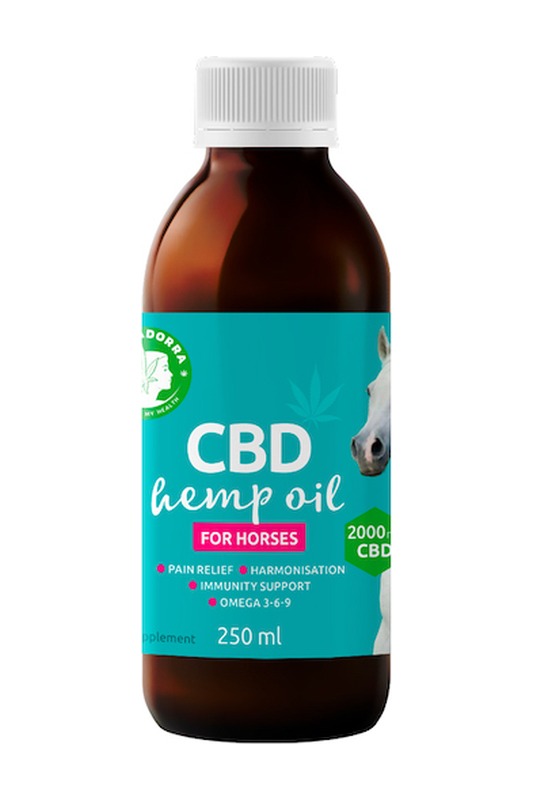
CBD has anti-inflammatory and immunomodulatory
properties – it could be an interesting helper
in the natural management of heaves.
Why is outdoor living sometimes not enough?
Owners of horses with heaves are often advised to move their horse to outdoor living. In most cases that is the right step, but there is a catch. A horse can live outdoors 24 hours a day and still be constantly exposed to dust.
A typical example is a dry paddock with packed earth, where every movement raises dust, or a bale of dry hay that the horses stand around all day.
Veterinarian MVDr. Dominika Bartošková, in an interview for Dušnost.cz (in Czech), also points out another common mistake: the horse with heaves has dust-free bedding and treated hay, but the horses around it stand on straw and get dry hay. The dust then spreads through the whole space.
So it is not enough to adjust only one horse's stall or feed. You need to think about the environment as a whole.
And be careful too, because a cough is not always heaves. It may be caused by an infection, parasites, the heart or even a tumour. That is why every horse with breathing problems should see a vet first, before we start adding anything to its feed. The vet will listen to the horse's lungs, may look into the trachea with an endoscope, do a lung wash (BAL), which best shows how much inflammation the horse has, or order a blood count, an X-ray or an ultrasound.
What really helps?
Proper management of a horse with heaves is what matters. That is why we list 5 basic rules that work very well in the long term:
-
As much time outdoors as possible. Ideally year-round outdoor living, if the horse does not react to outdoor allergens and the paddock is not dusty.
-
Dust-free bedding. Good-quality wood shavings, suitable pellets (hemp hurds) or other material with minimal dust.
-
Treating the hay. Dry hay can be a major source of dust, mould spores and other irritating particles.
-
Dampening hard feed and pellets. Even good-quality feed may not be completely dust-free.
-
Reducing dust in everyday work. Don't sweep while the horse is nearby, don't groom it in an enclosed space and avoid dusty arenas.
Consistency matters. Just because the horse has stopped coughing does not mean you can go back to the original stabling and feeding. Asthma can be well controlled, but repeated contact with the triggers can bring the symptoms back.
If management does not help, the vet will usually start treatment with medication – beginning with inhaled corticosteroids.
How does hemp herb work for heaves?
Hemp herb contains naturally occurring cannabinoids, mainly CBDA and CBD, and other plant compounds. It is the cannabinoids that are being researched for their possible anti-inflammatory effects.
So could hemp herb also help horses with heaves? In theory yes, but we do not yet have clinical studies that would directly confirm its effectiveness in equine asthma.
The experience of some horse owners suggests that after adding the herb they noticed less coughing or better overall well-being in their horses. However, these are individual observations, and the influence of other factors cannot be ruled out.
The way it is given also matters. Dry herb can be dusty, which is undesirable for a horse with sensitive airways. It needs to be prepared as an infusion (like a tea) so that it does not create dust.
On our ranch I have been using hemp herb for horses for more than 5 years
and in the video you can see how I prepare it (the video is in Czech).
Hemp herb is not a substitute for veterinary treatment or proper management. It may be of interest as part of complementary care, but its suitability, safety and dosage must be assessed individually.
Real experiences with hemp herb
These are not studies, but real experiences.
“I don't have horses with heaves at home. But in winter I add the herb to their feed as a treat and as prevention, because winter, when they spend more time inside, is exactly when coughing appears most often.”
Lucie Garabasova
“I always keep hemp herb in stock at home. As soon as one of my 4 horses starts coughing, I add it to its feed and the cough settles down very quickly.”
Renata R.
“So far it looks like the herb works well. Myst has improved, while Bella, who isn't getting anything yet, is rather worse. That's why I'm ordering another kilo and will give it to both of them, to see whether it really is the herb or just a coincidence. I prepare the herb as an infusion – I pour water over it in the evening and in the morning I add all of it to the feed.”
Karolína D.
How to prepare the herb?
Stables usually don't have scales, or batteries for them – so I'll admit we don't weigh the herb in grams, just in handfuls. When I make tea for 1 horse, we put a smaller handful of herb at the bottom of a bucket, pour hot water over it and let it steep for about 5 minutes. Later I pour the infusion over the feed, and if it's too hot, we dilute it with water. The herb is wet, so it doesn't create dust – and with a horse with heaves, that is the main thing.
When I make tea for more horses, I simply use more plant material.
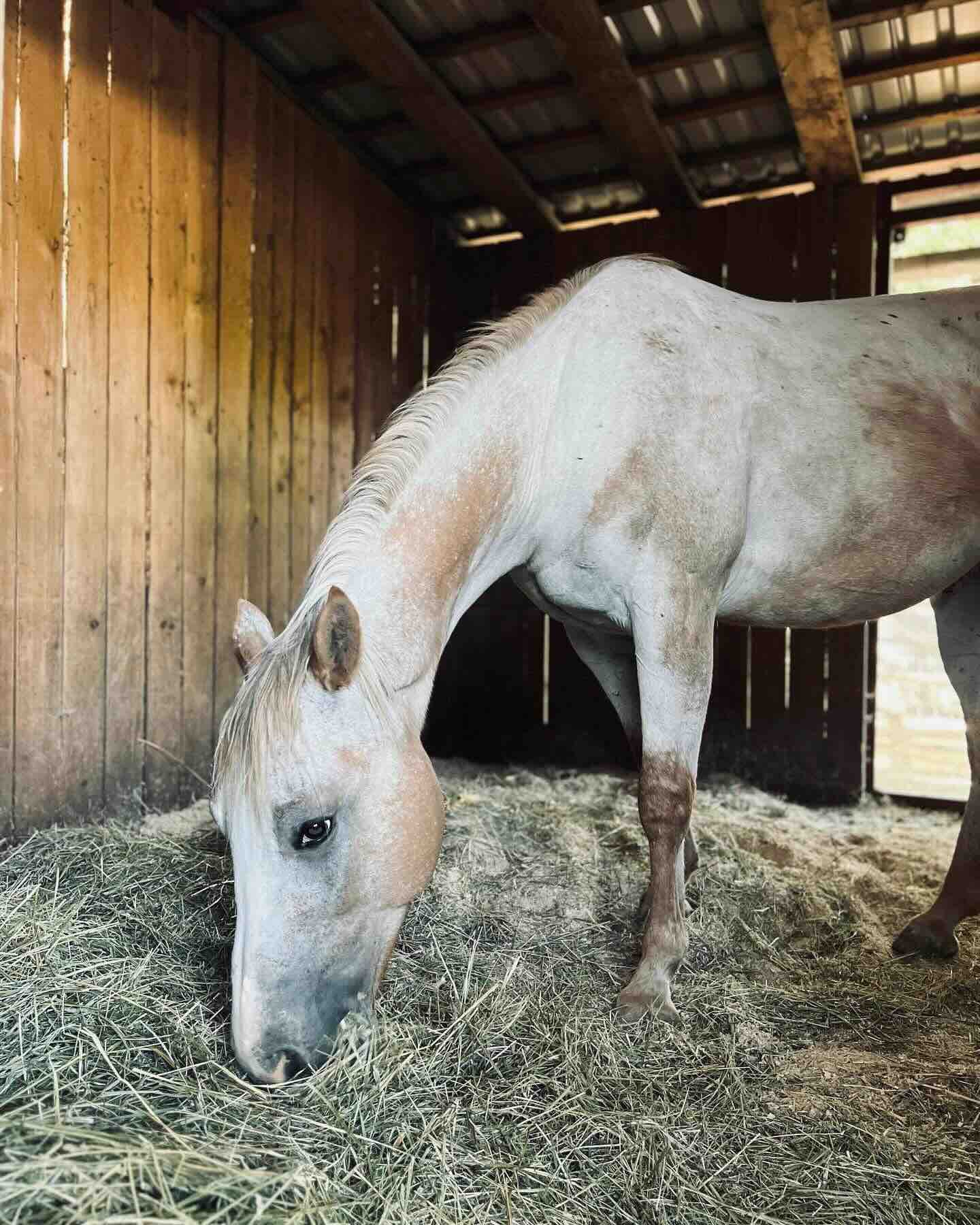
For horses with heaves, besides feed supplements, the most important thing is proper
management – soaked hay, an environment as free of dust as possible, and more...
Where to get the herb
We don't yet offer it publicly in our e-shop as a product for horses. We do have hemp teas, but you would use them up in no time and it wouldn't pay off :-) So just write to us or give us a call and we'll agree on how much to send you and how. We usually supply it in quantities of at least 1 kg.
Hemp and horses: what science says
Let's be frank: there is no study yet that has tested hemp or CBD directly in horses with heaves. But we do know something.
- In mice and rats CBD reduced airway inflammation in experiments (Vuolo et al., 2015 and 2019). But a mouse is not a horse, so the results cannot simply be transferred.
- In horses research has mainly looked at whether CBD is safe. Horses tolerated it well both as a single dose and when it was given for two weeks (Thomson et al., 2024; Eichler et al., 2023). It also turned out that a horse absorbs only a small part of it from feed, and each horse differently (Di Salvo et al., 2025). So no one can yet determine an exact dose.
- In practice CBD is used in horses mainly for pain, healing or restlessness, and this rests largely on owners' experience.
In short: it makes sense that hemp could support the body during inflammation, and it appears safe. But it has not yet been proven to help directly with heaves.
Careful with competitions
If you compete with your horse, be careful with hemp. THC is always prohibited under FEI rules. CBD is permitted outside competition, but it must not be in the horse's body at the time of competition. And because it is stored in fat, it takes a varying amount of time to be eliminated. So allow a reserve of about 5 days before a competition and do not give your horses hemp herb during that time.
What other natural options can you try for heaves?
Alongside proper stabling, dust-free feeding and veterinary care, some natural supplements can also have their place. Studies with omega-3 fatty acids, polyphenols and antioxidants have produced particularly interesting results.
- Omega-3 fatty acids (DHA) – a study by Nogradi et al. (2015) showed that giving DHA from marine algae together with a dust-free diet reduced coughing, breathing effort and some markers of inflammation in horses with asthma. Hemp and linseed oil also contain omega-3, but mostly in the form of ALA, which does not have the same proven effects as DHA.
- Polyphenols – natural antioxidants found, for example, in some plants and fruit. A 2025 study suggested that a special blend of polyphenols may have a favourable effect on inflammatory processes in the airways of asthmatic horses.
- Spirulina and antioxidants – in a smaller study, some symptoms of breathing problems improved in horses after they were given a supplement containing spirulina and other substances. The results are promising but still preliminary.
- Herbs for breathing – plantain, thyme, fennel or anise, for example, are traditionally used. They can be part of complementary care, but their effectiveness specifically in equine asthma has not been sufficiently proven in clinical studies.
PEA and heaves in horses: an interesting line of research
Besides hemp compounds, scientists are also studying palmitoylethanolamide (PEA), a naturally occurring substance involved in regulating inflammatory processes in the body.
A study by Roviezzo et al. (2017) brought interesting results: in mice, PEA limited the development of allergic airway inflammation, bronchial hyperreactivity and the activation of mast cells.
So could PEA also help horses with heaves? In theory yes, because equine asthma is also linked to chronic airway inflammation. However, clinical studies directly in horses are still lacking. PEA for horses is therefore an interesting substance for further research, but we cannot yet guarantee its effectiveness or safety when given long-term to horses with heaves. Any use is best discussed with your vet beforehand.
And what about pure CBD?
CBD (cannabidiol) is interesting above all for its anti-inflammatory and immunomodulatory properties. Its effect on inflammatory processes is also being studied in connection with asthma and other respiratory diseases.
Experimental studies in animals (Vuolo et al., 2015 and 2019) showed that CBD can reduce airway inflammation, influence the production of inflammatory cytokines and limit some changes in lung tissue associated with asthma.
In horses specifically we have no clinical study that would confirm the effectiveness of CBD directly in heaves. Research in horses so far has focused mainly on the absorption, tolerance and safety of CBD. The results of some short-term studies are encouraging, but they do not allow an effective dose for equine asthma to be determined.
Interestingly, CBD is also being studied in human asthma, where scientists are interested in its possible effect on inflammatory processes.
Can a horse with heaves live a full life?
Usually yes, it can. But it is very individual. In my life I have known several horses with heaves, and they were all different. In one horse the heaves only showed when running uphill, another was affected only in a certain season of the year, and I have also known a horse that had to inhale medication for heaves regularly and was practically retired from any work. So it is very individual, depending on which form of heaves your horse has. But you always have a chance of a normal life if you try to give your horse good management and also exercise, because that is usually key.
This article is for information only and does not replace veterinary care.
Sources and cited studies:
- MSD Veterinary Manual – Asthma in Horses
- Vet Times – Update on severe equine asthma
- University of Florida IFAS – Understanding Equine Asthma and RAO
- Veterinary Evidence – inhaled vs. systemic corticosteroids in severe asthma
- Gosav et al. 2025 – case report of severe asthma in a sport horse
- Nogradi et al. 2015 – omega-3 and a dust-free diet
- Vuolo et al. 2019 – CBD and allergic asthma (mice)
- Vuolo et al. 2015 – CBD and cytokines in an asthma model (rats)
- Thomson et al. 2024 – CBD/CBDA hemp extract in horses
- Eichler et al. 2023 – CBD pharmacokinetics and anti-doping control
- Di Salvo et al. 2025 – CBD oil vs. paste in horses
- FEI – classification of CBD as a controlled medication
- AIHC 2024 – hemp flour in feed and THC/CBD testing